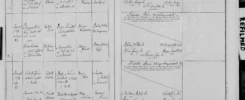
Researching Jewish ancestry is a unique area of genealogy for two important reasons—reasons that, unfortunately, result in the Jewish branches of a family tree being shorter than others.
In Hungary, church-based civil registration generally began in the 17th and 18th centuries. Prior to the introduction of state civil registration in 1895, these church registers served as the official records for civil proceedings. However, Jewish congregations did not follow this practice, or did so only sporadically.
A practice akin to formal registration began to spread in the late 18th century through circumcision (*mohel*) records. These were supplemented by *Memorbuch* or *Mazkirbuch* volumes—which listed the names of community martyrs—and *Yahrzeit* books, maintained in connection with burials. Data regarding the Jewish population can also be found in *pinkasim* (community record books), which documented significant events in the life of the congregation, as well as in various tax lists.
Although some congregations had begun keeping records resembling civil registers as early as the late 18th century, the matter was ultimately resolved by an imperial decree mandating Jewish civil registration starting in 1851. It was only then that the maintenance of birth, marriage, and burial registers became standard practice within Jewish congregations. Initially, civil registers were generally kept in German, though a German-Hebrew bilingual practice also existed. The use of the Hungarian language became widespread starting in the 1870s.
Unfortunately, the registers are often incomplete; data were frequently entered retrospectively, meaning the information is not always accurate.
It is also important to consider Jewish naming conventions. According to Jewish teaching, parents are divinely inspired when choosing a name, meaning the child’s name simultaneously shapes their future. Among European Jews, it is customary to name a child after an ancestor. Boys’ Hebrew names are announced at their circumcision—when they are eight days old—while girls’ names are announced during the first Torah reading. Consequently, Jewish birth registers differ from those used by Christian denominations, as they contain separate columns for circumcision and the naming ceremony.
Until the end of the 18th century, Jews did not use surnames and first names in the European civil sense; instead, they used names linked to the father (e.g., Éliás, son of Abraham). A decree issued by Joseph II in 1787 mandated that the Empire’s Jewish inhabitants adopt German or locally styled names. The names that became widespread in this way were derived from occupations, personal traits, colors, or places of origin.
Interesting combinations of these elements are very frequently found in Jewish registers. I often encounter registry entries where the first name is a combination of a traditional biblical Jewish name and a Christian name; however, it is also common to find that the Jewish first name recorded in the register differs from the name used in everyday civic life. This issue regarding official name usage was only resolved with the introduction of state civil registration on October 1, 1895.
Name changes among Jewish families were frequent as early as the late 19th century, but became particularly common in the first half of the 20th century. The primary reasons for this were usually to avoid prejudice and to facilitate easier advancement in civic life. The conversion of Jewish individuals to Christianity also became increasingly common during the 20th century. Initially, this occurred primarily in cases of mixed marriages, but later, many sought to circumvent regulations that discriminated against Jews. Naturally, there were also those who converted out of genuine religious conviction.
We must also address the origins of the Jewish population in Hungary. A Jewish population has been present in Hungary continuously since the time of the Magyar Conquest, though their rights and living conditions varied across different eras. For instance, in the 12th century—a time when discriminatory measures were being enforced against them in several other European countries—Jews in Hungary were able to live in relative peace. Although the situation later deteriorated, following the Mongol invasion, they were frequently called upon to handle credit and lending transactions. In general, the Jewish population tended to live in concentrated communities and engaged in various service-oriented activities, such as lending and trade.
During the resettlement period following the Ottoman era, large numbers of Jewish settlers arrived alongside others to populate the depopulated regions, coming primarily from the Austrian provinces as well as Bohemia and Moravia. Immigration from the east—specifically from Poland and Galicia—intensified from the second half of the 18th century onwards; as a result, the Jewish population in Hungary multiplied, exceeding 300,000 by the mid-19th century.
As previously mentioned, however, the options available to a genealogist are limited for two reasons. One of these—the late introduction of civil registration—has already been discussed. The other complicating factor is the tragedy that befell the Jewish people in the 20th century: the Holocaust (Shoah). The roundup, deportation, and subsequent extermination of many Hungarian Jews are incompletely documented. Although various Jewish databases have endeavored to collect and organize all available information, accessing data on specific individuals is often difficult or even impossible. In the post-war period, the fact of death was established retroactively through court proceedings and recorded in civil registers based on the victims’ places of origin; unfortunately, however, these entries do not account for every person who was murdered or went missing. While lists of deportees and certain records from various concentration camps do exist, the sheer madness of the era meant that maintaining comprehensive records was not a priority.
Researching Jewish family history is a fascinating and exciting endeavor—a sentiment surely shared by anyone who has undertaken it. You can read about the findings of one such Jewish family history project here.